On the Road--America's Packard Museum
The Packard automobile was begun in 1899 by brothers James and William Packard in Warren, Ohio. In 1903, the brothers relocated to Detroit, Michigan and changed the name from Ohio Automobile Company to Packard Motor Car Company. It built a reputation as a luxury brand due to its styling and engineering excellence. Its primary competitors were Pierce-Arrow, Peerless, and Duesenberg.
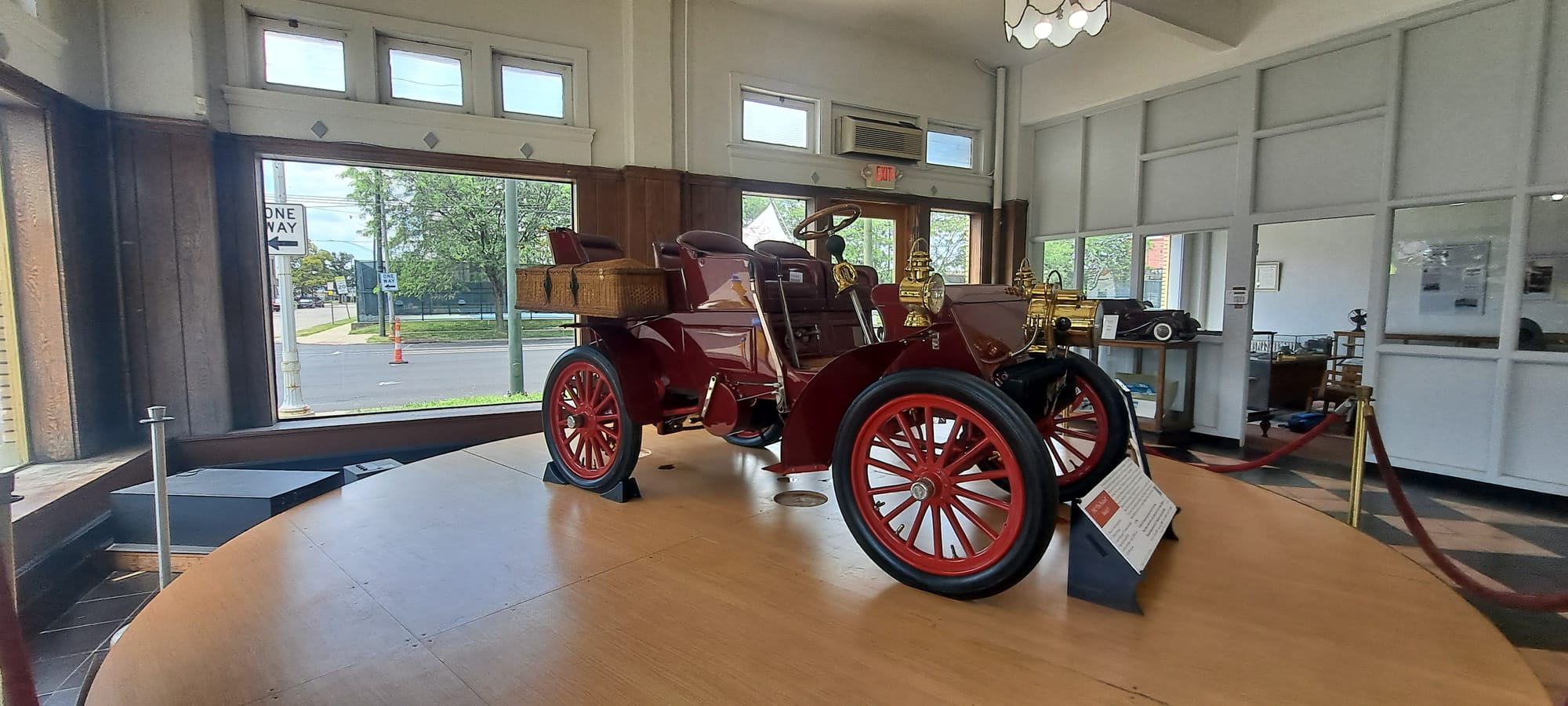
America’s Packard Museum is in a former Packard showroom in Dayton, Ohio. It traces the history of Packard the ages beginning with a brass era Packard Model F built in 1902. This was the third model in production and over two years, the company produced 179 Model F automobiles. It was during this timeframe that James Packard coined the phrase “Ask The Man Who Owns One.” This car was previously owned by the Rockefeller family and famed collector Bill Hurrah.
In 1908, Packard began producing trucks using the Model F chassis. Packard produced 4,000 Model F trucks for military use beginning in 1916. During World War I, Packard introduced the Model E and became the largest supplier of vehicles to the U. S. Government, building 10,000 Army trucks. The last Packard truck was produced in 1923.
In 1915, Packard was the first manufacturer to introduce a V12 to the American market. It utilized two six-cylinder engines and was called the “Twin Six.”
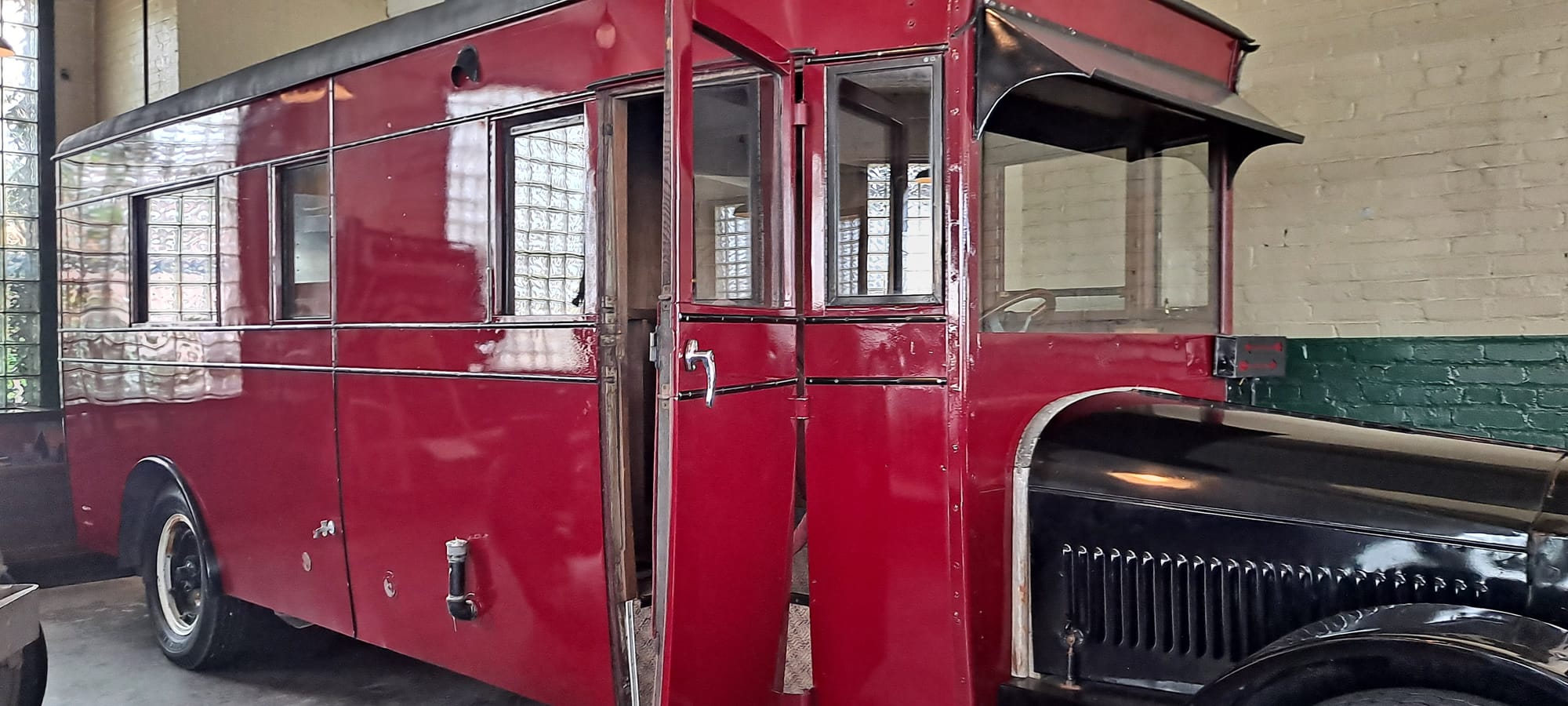
The Museum has one of the first motorhomes built. Using a 1917 Twin Six chassis, Earl C. Anthony’s San Diego Packard distributorship built a motorhome for Pickman Stages, which toured people around California. It had a stove, a bed which converts into two sofas, and a commode.
In 1921, Packard introduced the Single Six automobile with a lower price point than the Twin Six. Amazingly, the lower price point wasn’t well received in the marketplace during the first year. After restyling, the Single Six sales improved.
During the Great Depression, Packard increased its product line to include less expensive automobiles known as “Junior” models in 1935. By 1940, the six and eight cylinder “junior” models constituted 92% of Packard’s output while the Senior models continued to be hand-built. Like other luxury brands, the bodies were frequently custom- made by third parties such as LeBaron and Brewster & Company.
The Packard automobile was highly sought after worldwide prior to the Great Depression. The Japanese royal family owned more than ten Packards while King George V of Sweden owned several. Even Joseph Stalin owned an armored Packard. When Joseph Kennedy was appointed as the ambassador to the United Kingdom, the U.S. government bought and shipped this 1937 Super Eight to England for his use.
As with other automobile manufacturers, Packard became a supplier to the U.S. Government during World War II. Between 1940 and 1945, Packard built 55,523 V-1650-7 Merlin engines used in P51 Mustang airplanes. They also produced the engine for PT-109 which John F. Kennedy commanded during World War II. PT-109 was one of fifteen small “Patrol Torpedo” boats in the Solomon Islands hoping to disrupt the Japanese naval traffic.
In 1941, Packard entered the taxicab business using the smaller junior cars with six-cylinder engines.
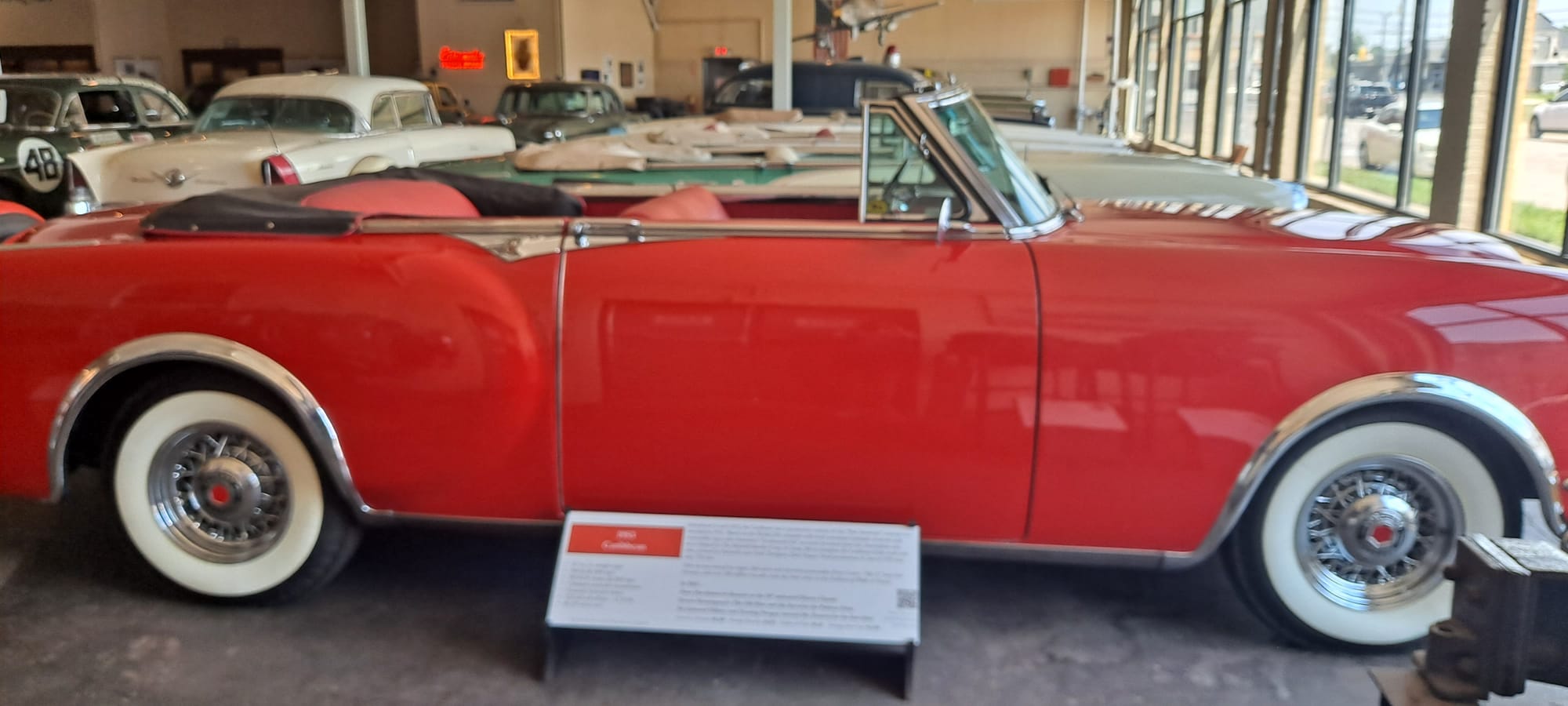
Packard’s final line was the Caribbean convertible introduced in 1953. It had a convertible top with the final body work being done by the Mitchell Bentley Corp of Ionia, Michigan. In 1953, they produced 750 Caribbean models including this one which was owned by Perry Como, a singer with five Emmys. The Caribbean convertible had more stylish lines and contemporary paint. In 1955, Packard produced 500 Caribbean models.
Facing financial challenges, Packard merged with Studebaker in 1954. In 1958, the last Packard, a Packard Hawk, rolled off the line, which was an upgraded version of the Studebaker Hawk.
If you are in the Dayton area, this museum is well worth visiting. It is located just south of downtown with easy access to U.S. 35.